
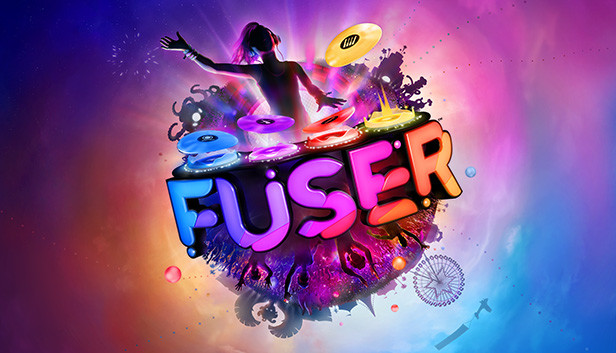
Developed by Harmonix
Published by NCSoft
Harmonix has really done a lot for music games, for better or worse. Granted, their expansion of the Guitar Hero formula via their ensemble party version, Rock Band, was by far the more entertaining and lasting of the genre, they followed it up with the inevitably disappointing Dance Central. Of course, that was always destined to fail given its reliance on the XBox’s Kinect peripheral. There’s a reason Just Dance remains the premiere dance game. Still, Harmonix has clearly been willing to try new things and expand technological elements for gameplay. One of their sneaky neat, and under-appreciated, games was the table-top game “Drop Mix.”
The idea of “Drop Mix” is pretty simple: using specialized playing cards with songs listed on them, players would place them on an electronic board. When paired with the mobile app, music would play from whatever speakers you were using. The spaces on the board were color-coded to a certain instrument track of the song. Ultimately, the goal was to remix all of these songs together. The game itself was pretty straight-forward and easy, but the true strength was in the hours of fun one could in “freestyle mode,” literally just rearranging cards and parts of songs to make your own mash-up.
Fuser is the natural extension of that, only without the cost prohibitive board and card packs (though there is DLC and more on that in a bit). Now, players can simply buy this game, get access to a bunch of songs while unlocking more, and either go through a single-player campaign mode to learn the more complicated elements, compete in “battles” online, or again, just mess around in “freestyle mode.” With the ability to alter tempo, key, pitch, mute tracks, and add effects, there’s a lot more to master.
Without question, Fuser is a fascinating and dope piece of software! It’s really fun playing around with different tracks. Turns out, the guitar riff from “Killing in the Name Of” goes with pretty much everything if you have it going at the right tempo! The hours I’ve spent just making my own mixes and messing around with different song load-outs has itself proven worth the time investment. Honestly? I’m still not sick of messing around with “freestyle.”
Unfortunately, the “game” part of it fails on almost every level, and it kind of winds up being cost prohibitive in more annoying ways. To that first point, it might be better to approach the “game” as less of a game and more of a tutorial. Of course, it’s one of those things where campaign basically being one long tutorial isn’t necessarily a bad thing. After all, it’s not just teaching you how to play; it’s teaching fundamental DJ principles. In a way, this game is spiritually more in line with the Rock Band “pro” controllers and components introduced in the third installment. Really, they’re trying to teach players about music and how do create it more than they are about teaching the basics of a video game.
However, that then makes it a problem that so many of the best songs require either a huge time commitment or a willingness to drop extra cash on DLC tracks. While there is a decent selection of songs available at the start, many of the best ones require “unlocking” via leveling up in the campaign mode, or simply buying in their DLC store. Given the game costs a full $60, it’s actually pretty scummy to have to do that. On the one hand, it’s easy to understand Harmonix wanting to encourage players to play through the campaign and learn about the more intricate components. It’s also easy to see that they want to maximize their income given it probably costs a fair amount to license the music. On the other hand, the entire point of this game is to take your favorite tracks and mash them together!
This is one of those things where there needs to be some sort of cheat or something to unlock all of the songs. It’s actually not encouraging at all to see a track you can add…if you reach level 40… In fact, it’s actually discouraging! (I’ve long since given up any misgivings about ever getting access to a few of those tracks. I’ve put in over 20 hours of play, and I’m not even at level 10…) Since this is more “neat software to play with” than it is “video game that is engaging and fun,” it really doesn’t make sense to put any tracks behind the grind. DLC, ok, I can live with that to an extent. Yet even on that front, it feels kind of gross! There are definitely more songs worthwhile behind the paywall. And it sucks to have to spend extra money after dropping $60 on a full-priced game that isn’t really worth the initial cost of entry.
While I don’t necessarily think this game should be “free to play,” I do think it would have been better served with a model not unlike Just Dance. That franchise, wisely, opts for a “subscription.” You can buy a base game and get a bunch of songs to dance to that are fun and everything, but for a year-long subscription (cheaper than most gym memberships at that!), you can also get access to almost every single song that has ever been in any previous Just Dance on top of that! There’s still reason to buy the next game (if you want those new songs), but otherwise, it won’t run you $80, plus hours and hours and hours of grinding, just to get access to some of your favorite tracks.
It’s hard to argue that Fuser is worth its initial $60 price tag given that it puts so much behind grind and pay walls. After some time, though, it’s almost certainly cheaper. If you can find it for $20 and don’t mind dishing out a couple bucks for some added songs (which can help keep things fresh, as we saw with Rock Band), then it’s definitely a neat piece of technology that is fun and, shockingly, educational. It’s clear the folks at Harmonix love music. It is also clear, however, that they haven’t quite found a way to merge that with a love of games quite like they did with their magnum opus in Rock Band.
Reductive rating: It’s ok.
Available On: Windows, XBox One, PS4, Switch
 The Glitch